Actionable guidance from ISA Certified Arborists serving Edmonton, Sherwood Park, St. Albert, and surrounding Alberta communities.
Seasonal Maintenance
Pruning Your Trees Before First Snowfall
October 6, 2025Tree Care Expert Team6 minute read
Late-fall pruning reduces storm damage and keeps canopies balanced through winter.
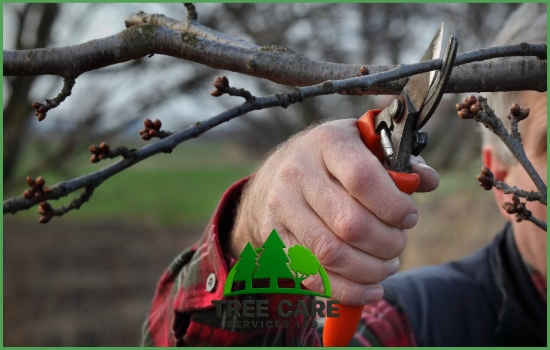
As autumn leaves begin to fall across Edmonton and the first frost warnings appear in the forecast, your trees are quietly shifting into dormancy. Strategic pruning before the snow arrives removes weak, overcrowded, or damaged growth so branches can withstand Alberta’s heavy snow loads. Done correctly, winter-ready pruning protects both your trees and everything beneath them.
Understanding Winter's Impact on Tree Structure
Snow and ice accumulate quickly on broad canopies, adding hundreds of pounds of weight to already fatigued wood. Unsupported co-dominant stems and dead limbs are the first to fail, often tearing healthy tissue as they fall. Edmonton’s freeze-thaw cycles intensify the risk by creating expansion pressure in existing cracks. Pruning away structural liabilities in the fall eliminates these weak points before winter stress arrives.
Optimal Timing for Pre-Winter Pruning
The sweet spot for most deciduous trees in Alberta runs from late October through early November—after leaves have dropped but before deep cold sets in. Pruning during dormancy minimizes sap bleeding, limits the attraction of pests, and gives pruning wounds a head start on sealing. Evergreen species can be touched up a little earlier, but major shaping is best reserved for late winter.
Professional Techniques for Winter Protection
Certified arborists rely on a combination of pruning strategies to prepare trees for snow and high winds:
Crown cleaning: Removes dead, diseased, or broken branches that would otherwise snap under winter load.
Crown thinning: Selectively reduces density to improve air flow and reduce the surface area that snow can cling to.
Structural pruning: Reinforces a dominant leader, establishes proper branch spacing, and eliminates competing stems.
Clearance pruning: Protects roofs, power lines, and walkways by redirecting growth away from targets.
Species-Specific Considerations
Edmonton’s urban forest features elms, maples, poplars, and spruce—all with different tolerances. Mature elms must be pruned between October 1 and March 31 to comply with provincial Dutch elm disease regulations. Silver maples and birch bleed heavily if pruned late in winter, so they should be scheduled before hard freezes arrive. Evergreens generally need lighter work, but removing storm-damaged branches keeps their pyramidal structure intact.
When to Call a Certified Arborist
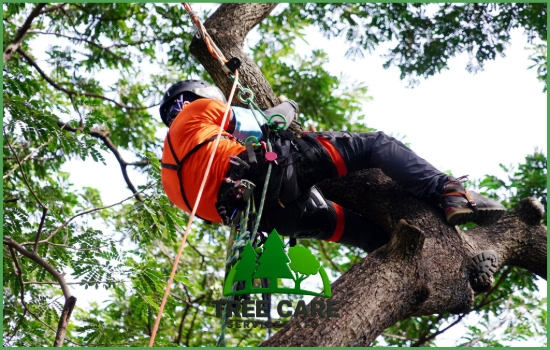
Large, mature trees or those close to structures require professional rigging to prune safely. ISA Certified Arborists understand how each cut alters the tree’s balance and how to climb or use aerial lifts without damaging bark. If you notice cracking stems, fungal fruiting bodies, or limbs that extend over your roof, book an inspection—winter is unforgiving to compromised trees.
Formal risk assessments combine visual inspections with advanced diagnostic tools.
Tree failures rarely happen without warning. Subtle structural defects build over time until a storm, chinook wind, or heavy ice load pushes them past the breaking point. A professional tree risk assessment uncovers those warning signs and delivers a mitigation plan that protects the people and property beneath your canopy.
The Science Behind Modern Assessments
Our ISA Tree Risk Assessment Qualified (TRAQ) arborists evaluate three factors for every tree: the likelihood of failure, the likelihood of impact, and the consequences should failure occur. By rating each component on a standardized matrix, we produce a risk level that informs whether pruning, cabling, monitoring, or removal is warranted.
Risk Factors Edmonton Homeowners Face
Urban trees in the Capital Region endure unique stresses:
Repeated freeze-thaw cycles that widen cracks and root plate gaps.
Sudden chinook winds that load branches with intense lateral force.
Soil compaction, salt exposure, and grade changes tied to development.
Historic topping or improper pruning that left weak unions behind.
Diagnostic Tools Our Arborists Rely On
Visual inspections remain the foundation, but advanced tools sharpen our findings. Resistograph drilling maps internal decay without compromising strength. Sonic tomography visualizes hollow sections, while soil probes and foliar analysis reveal root zone limitations hidden beneath turf. When warranted, aerial inspections give us a close look at canopy unions that can’t be assessed safely from the ground.
Mitigation Strategies Tailored to Your Property
Every assessment concludes with clear, prioritized recommendations. Depending on the risk level we may suggest selective pruning to reduce weight, installing dynamic or static cabling, improving soil conditions, restricting access beneath hazardous branches, or scheduling phased removals and replacements. The goal is always to retain healthy trees whenever safety permits.
Documentation & Insurance Advantages
Our reports include photographs, measurements, target analysis, and maintenance timelines—valuable evidence if you ever need to demonstrate due diligence to insurers, neighbours, or the municipality. Keeping assessments on file also simplifies permit applications when removals are unavoidable.
When to Schedule a Risk Assessment
After storms, excavation, or construction near critical root zones.
When large trees overhang homes, parking areas, or play spaces.
If you notice mushrooms, cavities, cracks, or sudden canopy dieback.
Every 3-5 years for mature landmark trees you plan to preserve.
September 28, 2025Emergency Response Crew5 minute read
Rapid stabilization prevents additional property damage after severe weather.
Severe windstorms and heavy spring snowfalls can snap branches, uproot shallow-rooted trees, and leave hazardous hangers suspended overhead. A fast, coordinated response keeps the situation from escalating and restores safe access to your property.
Immediate Safety Checklist After a Storm
Keep family members and pets away from damaged trees and downed power lines.
Inspect from a distance for leaning trunks, hanging branches, and tensioned wires.
Document the scene with photos or video before any cleanup begins.
Call utilities immediately if conductors are involved—never attempt to clear them yourself.
How Our Emergency Crews Stabilize Trees
Our ISA Certified crews arrive with rigging gear, cranes, and chip trucks to secure hazardous stems before cutting. We triage the site, install temporary support if needed, and dismantle compromised sections with controlled lowering techniques. Debris is processed and removed the same day so access is restored quickly.
Working With Insurance & Municipal Requirements
We provide detailed documentation of the damage, including measurements, photos, and equipment used—information insurance adjusters require. If municipal permits are necessary for boulevard trees, we coordinate approvals to keep the process moving.
Build Resilience Before the Next Storm
Preventive maintenance reduces future emergencies. Annual inspections, structural pruning, and soil health programs strengthen root systems and canopy architecture. Where removal is unavoidable, we recommend replacement species suited to Edmonton’s climate and your site conditions.
Facing storm damage right now? Call (587) 921-9207 for 24/7 emergency tree service.
Stay ahead of seasonal tree care tasks
Join our monthly email list for timely reminders, safety alerts, and exclusive offers tailored to Edmonton’s climate. We only send actionable tips—no spam, ever.